

31 May AI-Powered Personal Computing: Nvidia’s RTX Spark Chip
“`html
The Rise of AI-Powered Personal Computing: A Shift in Silicon Valley’s Landscape
In the throes of a technological evolution, Nvidia’s announcement of the RTX Spark chip marks a pivotal moment in the realm of personal computing. This development not only signifies Nvidia’s entry into the consumer PC chip market but also underscores a broader shift towards integrating artificial intelligence seamlessly into everyday computing tasks. As traditional barriers between hardware, software, and user interface dissolve, the landscape of personal computing is set for a profound transformation.
Breaking Down the Silos: Nvidia’s Strategic Leap
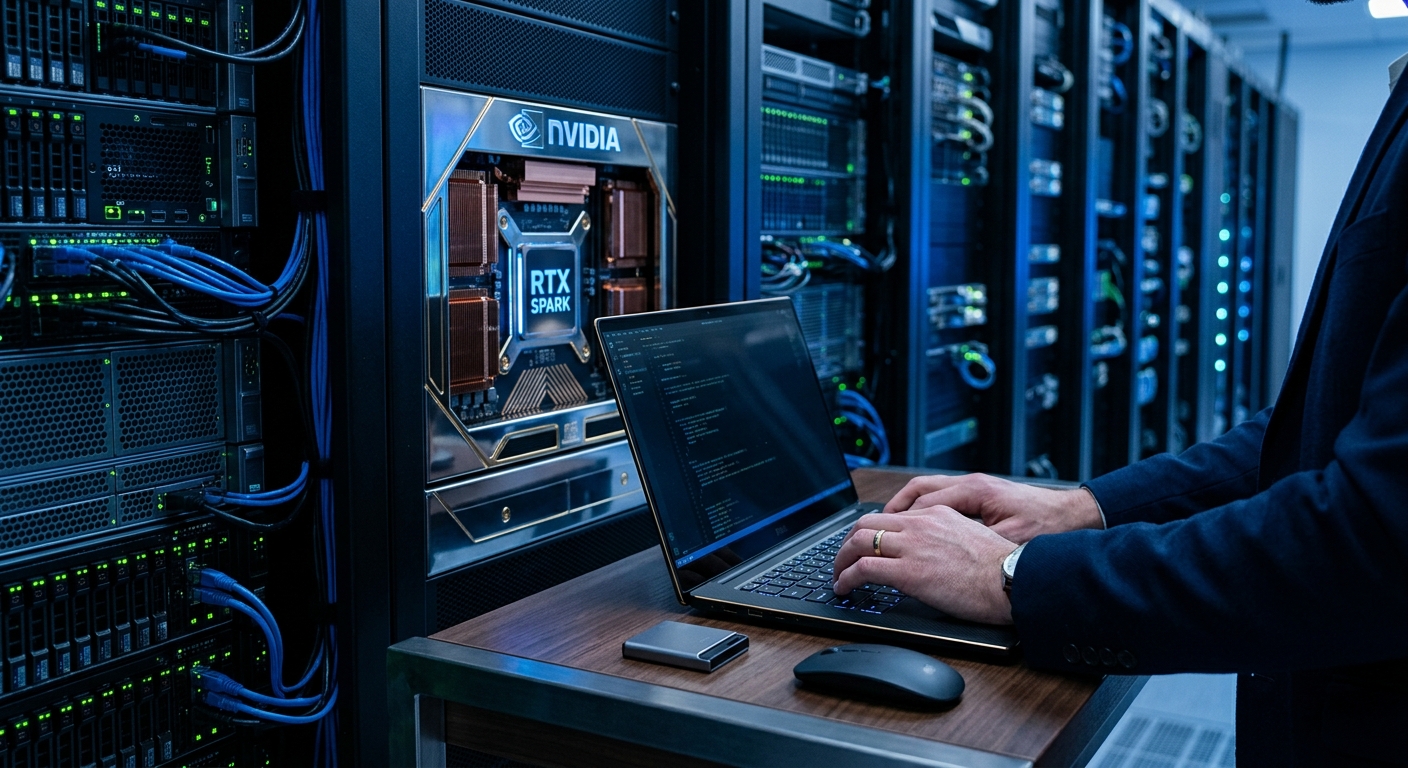
Nvidia’s RTX Spark chip represents a strategic leap into a space traditionally dominated by Intel and AMD. Built on Arm architecture, similar to Apple’s and Qualcomm’s approaches, the RTX Spark is designed to support complex computational tasks involving both CPU and GPU capabilities. With up to 20 CPU cores and 6,144 GPU cores, it promises to redefine what users can expect from thin-and-light laptops, extending capabilities to render high-resolution graphics and manage large-scale AI tasks without the tether of a power cord.
“This is the most efficient PC chip ever built,” claims Nvidia’s Mark Aevermann, highlighting a new era where AI becomes the user experience.
However, the transition to Arm-based architecture entails running legacy Windows software through an emulation layer, which may impact performance. Over the years, Microsoft has been honing its Windows ecosystem to accommodate such shifts, working closely with Nvidia to ensure the emulation is as seamless as possible.
Microsoft’s Collaborative Vision
The collaboration between Microsoft and Nvidia is more than a technical partnership; it’s a shared vision for the future of personal computing. The new Surface Laptop Ultra, incorporating Nvidia’s RTX Spark chip, exemplifies this vision. It promises not only enhanced performance but also integrates advanced AI capabilities directly into the user interface, potentially allowing users to interact with their computers in more intuitive ways.
Microsoft has been preparing Windows for this Arm revolution, positioning the Surface Laptop Ultra as a flagship device that showcases these advances. With a 15-inch mini-LED touchscreen and a powerful battery life, this device is designed for those who demand high performance and flexibility in their computing tasks.
Legal and Market Implications
As technology advances, so do the legal frameworks that govern its use. The ongoing legal battle between Amazon and Perplexity over AI agent access rights signals the complexities that accompany these technological innovations. The outcome of this case could set significant precedents for how AI agents are treated under current laws, influencing every sector from retail to SaaS platforms.
Moreover, the competitive landscape is shifting. As Nvidia enters the consumer chip market, companies like Dell and Microsoft are recalibrating their strategies to compete with Apple’s aggressive pricing and market positioning with the MacBook Neo. The emphasis is increasingly on delivering premium experiences at accessible price points, leveraging advanced materials and cutting-edge technology.
Looking Ahead: The Future of Personal Computing
The introduction of AI-driven chips like Nvidia’s RTX Spark could herald a new era where personal computers are not just tools, but active participants in productivity and creativity. This paradigm shift suggests a future where user interfaces are increasingly voice-driven and intuitive, freeing users from complex interactions and enabling more natural, conversational engagements with technology.
As these technologies mature, they promise to redefine personal computing, making it more responsive, integrated, and capable than ever before. The convergence of AI, advanced hardware, and innovative user interfaces marks the dawn of a new age in Silicon Valley, one where efficiency and intelligence are built into the very fabric of our digital lives.
“`
Sorry, the comment form is closed at this time.