




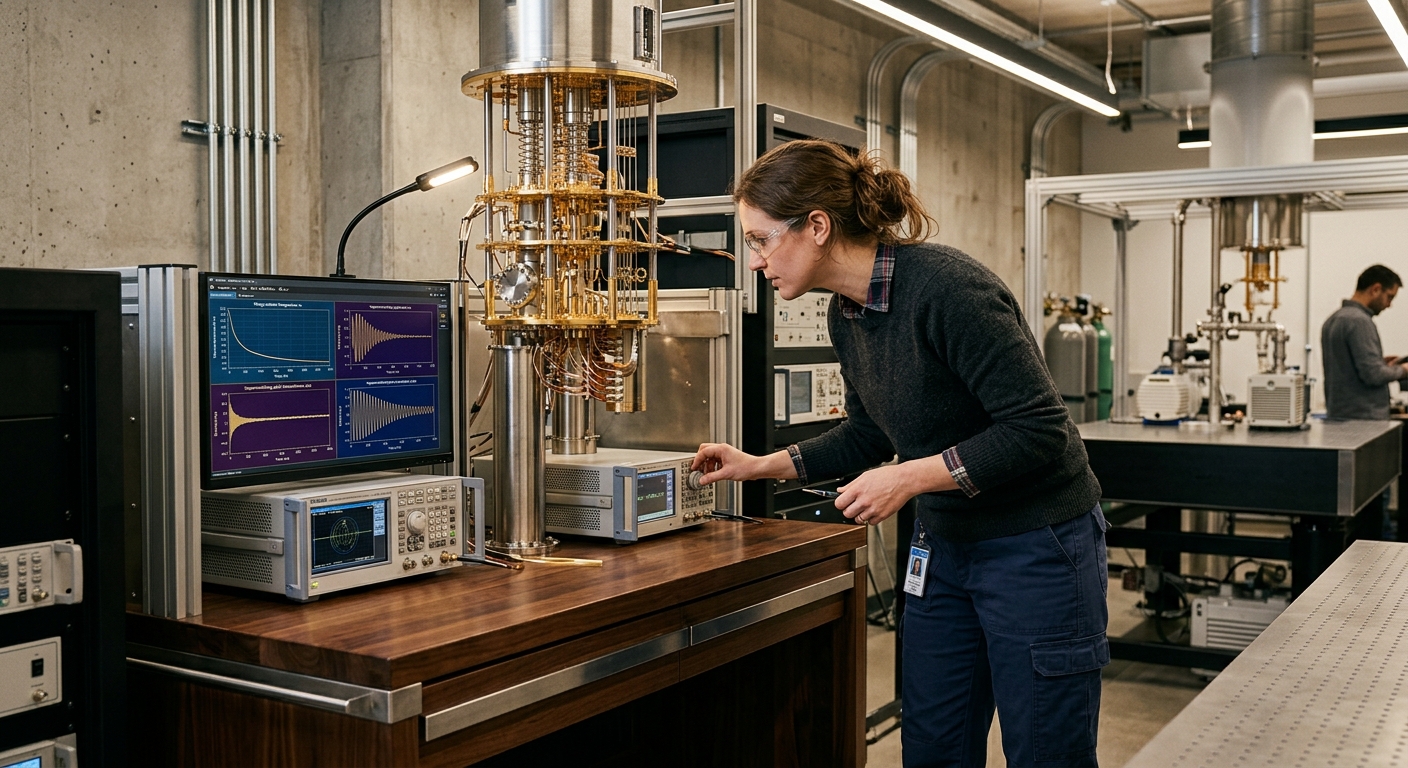
23 Jun Quantum Computing Wars: Technological Rivalry Ahead
The Quantum Computing Wars: A New Era of Technological Rivalry
Quantum computing is the next frontier in computing technology, promising to outperform classical computers in solving complex problems. This potential has sparked intense competition among technology giants, research institutions, and governments globally, each vying for dominance in this revolutionary field.
What is Quantum Computing?
Quantum computing is a type of computation that leverages the principles of quantum mechanics, such as superposition and entanglement, to process information. Unlike classical computers that use bits as the smallest unit of data, quantum computers use qubits, which can represent both 0 and 1 simultaneously. This unique feature allows quantum computers to perform multiple calculations at once, potentially solving problems that are currently intractable for classical computers.
Key Players in the Quantum Race
The race to achieve quantum supremacy is primarily led by major tech companies like IBM, Google, and Microsoft. IBM has been a pioneer in the field, providing cloud-based quantum computing services through its IBM Quantum Experience platform. Meanwhile, Google made headlines in 2019 when its quantum computer, Sycamore, reportedly achieved quantum supremacy by solving a problem in 200 seconds that would take the world’s fastest supercomputer 10,000 years to complete Nature.
In addition to tech giants, governments are investing heavily in quantum research and development. China, for instance, has launched a national quantum program with a reported investment of $10 billion aimed at advancing quantum communications and computing Scientific American. The European Union and the United States are also significant players, with substantial funding directed toward quantum technology initiatives.
Challenges and Opportunities
Despite its promise, quantum computing faces several technical and practical challenges. Qubit coherence, error rates, and scalability remain significant hurdles. However, advancements in these areas could revolutionize industries such as cryptography, drug discovery, and financial modeling by providing unprecedented computational power.
The potential benefits of quantum computing extend beyond mere computational speed. For instance, quantum algorithms could dramatically enhance machine learning models, improving tasks ranging from pattern recognition to predictive analytics. This capability aligns well with Virtucom’s focus on automation and operational efficiency, highlighting the transformative potential of integrating quantum computing into business processes.
The Future of Quantum Computing
As the quantum computing wars intensify, collaboration and competition will likely drive the field forward. Partnerships between academia, industry, and governments are essential to overcoming current limitations and ensuring that quantum technologies are developed responsibly and ethically.
Moreover, businesses should prepare for the eventual integration of quantum computing into mainstream operations. Companies like Samsung are already strategizing their AI adoption, as seen in their strategic shift, indicating that early adopters of quantum technology may gain a competitive edge.
FAQ
What industries will benefit most from quantum computing?
Quantum computing is expected to revolutionize industries such as cryptography, pharmaceuticals, and finance. These fields demand high computational power for tasks like data encryption, drug discovery, and complex financial modeling.
How does quantum computing differ from classical computing?
Unlike classical computers, which use bits as the smallest unit of data, quantum computers use qubits. Qubits can represent both 0 and 1 simultaneously, enabling quantum computers to perform many calculations at once, potentially solving complex problems more efficiently.
What are the major challenges facing quantum computing?
Key challenges include maintaining qubit coherence, reducing error rates, and achieving scalability. These technical hurdles must be addressed to make quantum computing viable for practical applications.
Sorry, the comment form is closed at this time.