




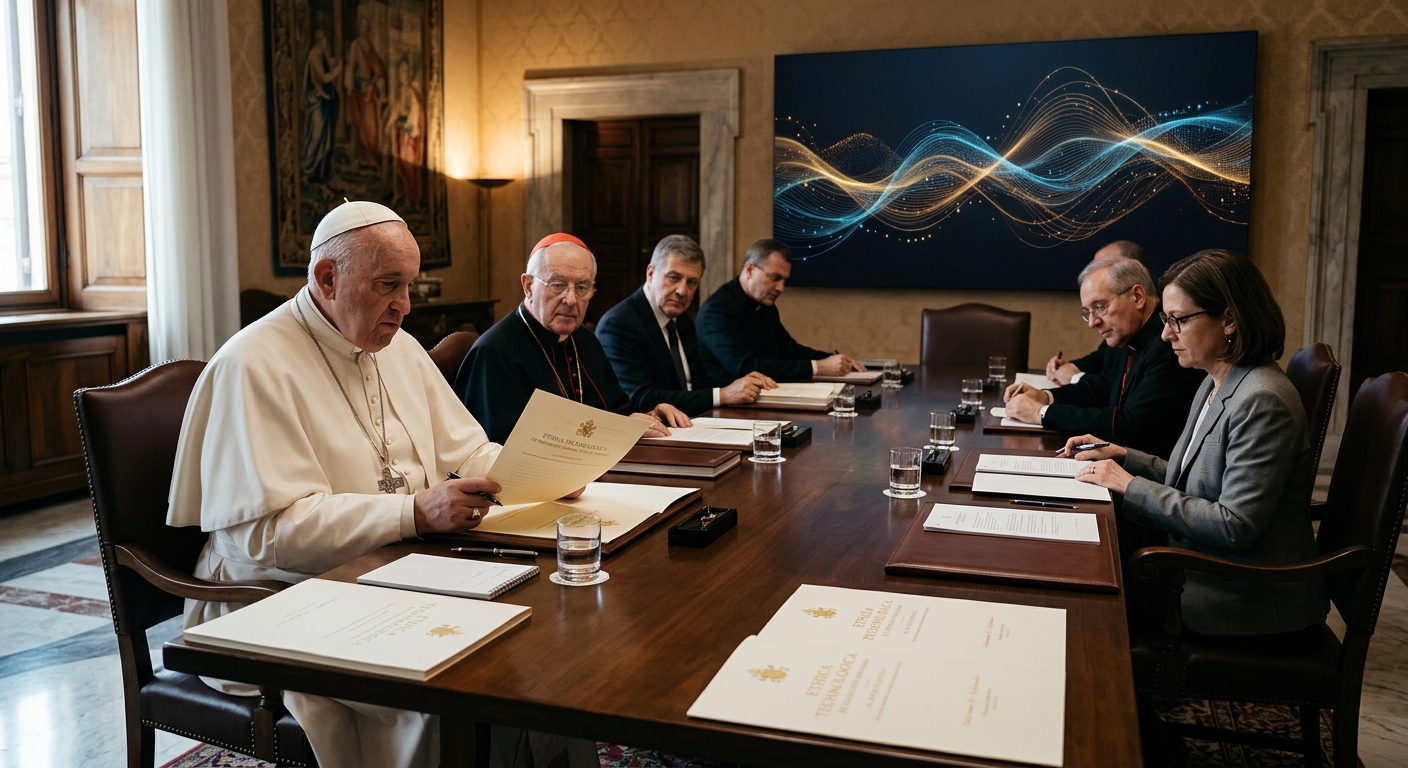
25 May Pope Leo XIV’s Encyclical on AI Governance
“`html
Pope Leo’s Encyclical: A Call for Human-Centric AI Governance Amidst Technological Expansion
Pope Leo XIV has issued a compelling papal encyclical, “Magnifica Humanitas,” which addresses the profound challenges and ethical considerations presented by artificial intelligence (AI) in contemporary society. While AI serves as the focal point, the document underscores a broader narrative about the concentration of power, inequality, and the erosion of democratic values, issues that transcend the advent of AI.
A Historical Perspective on Technological Power
This encyclical draws parallels between today’s AI-driven world and historical technological revolutions, echoing concerns raised during the Industrial Revolution by Pope Leo XIII. It emphasizes that the ability of technology to shape societies is not new, but the scale and speed of AI proliferation exacerbate existing societal issues. The document warns against the “Babel syndrome,” where the idolatry of profit and uniformity suppresses human diversity and dignity.
AI and the Concentration of Power
Pope Leo XIV articulates concerns that AI technology, when controlled by a select few, can exacerbate power imbalances and hinder equitable societal development. He argues that without proper oversight, AI can reinforce the dominance of those with existing economic resources and data access, further marginalizing less privileged communities. The encyclical calls for transparent and accountable governance frameworks to ensure AI serves the common good.
Proposals for Ethical AI Implementation
The encyclical proposes several actionable measures to align AI development with human dignity:
- Introduce social criteria for AI and automation deployment, ensuring that these technologies benefit society as a whole.
- Implement protections and retraining programs to support workers displaced by AI advancements.
- Ensure human oversight in AI systems, particularly in critical areas like warfare, to prevent opaque decision-making processes.
- Promote transparency in algorithmic decision-making, especially in contexts like employment and access to services.
- Develop AI technologies that are environmentally sustainable, reducing their ecological footprint.
The Global Influence of AI Governance
This encyclical arrives amidst global discussions on AI regulation, including delayed governmental actions like the proposed U.S. executive order on AI oversight. Pope Leo XIV’s call for participatory governance and disarmament of the AI arms race resonates with concerns about unchecked technological advancement. As tech giants and governments grapple with AI’s implications, the Vatican’s perspective adds a moral and ethical dimension to the conversation.
Conclusion
Pope Leo XIV’s encyclical serves as a reminder of the need for a balanced approach to AI, one that prioritizes human dignity and democratic values over unchecked technological growth. By advocating for inclusive and transparent AI governance, the document seeks to ensure that technological power is used responsibly, fostering a future where human intelligence guides innovation for the benefit of all.
“`
Sorry, the comment form is closed at this time.